
So, once you’ve started a presentation using the Presentation dialog, how do you control the presentation?
Basically, it’s as simple as just pressing the space bar to switch to the next slide. For more options, read on.
What a presentation looks like
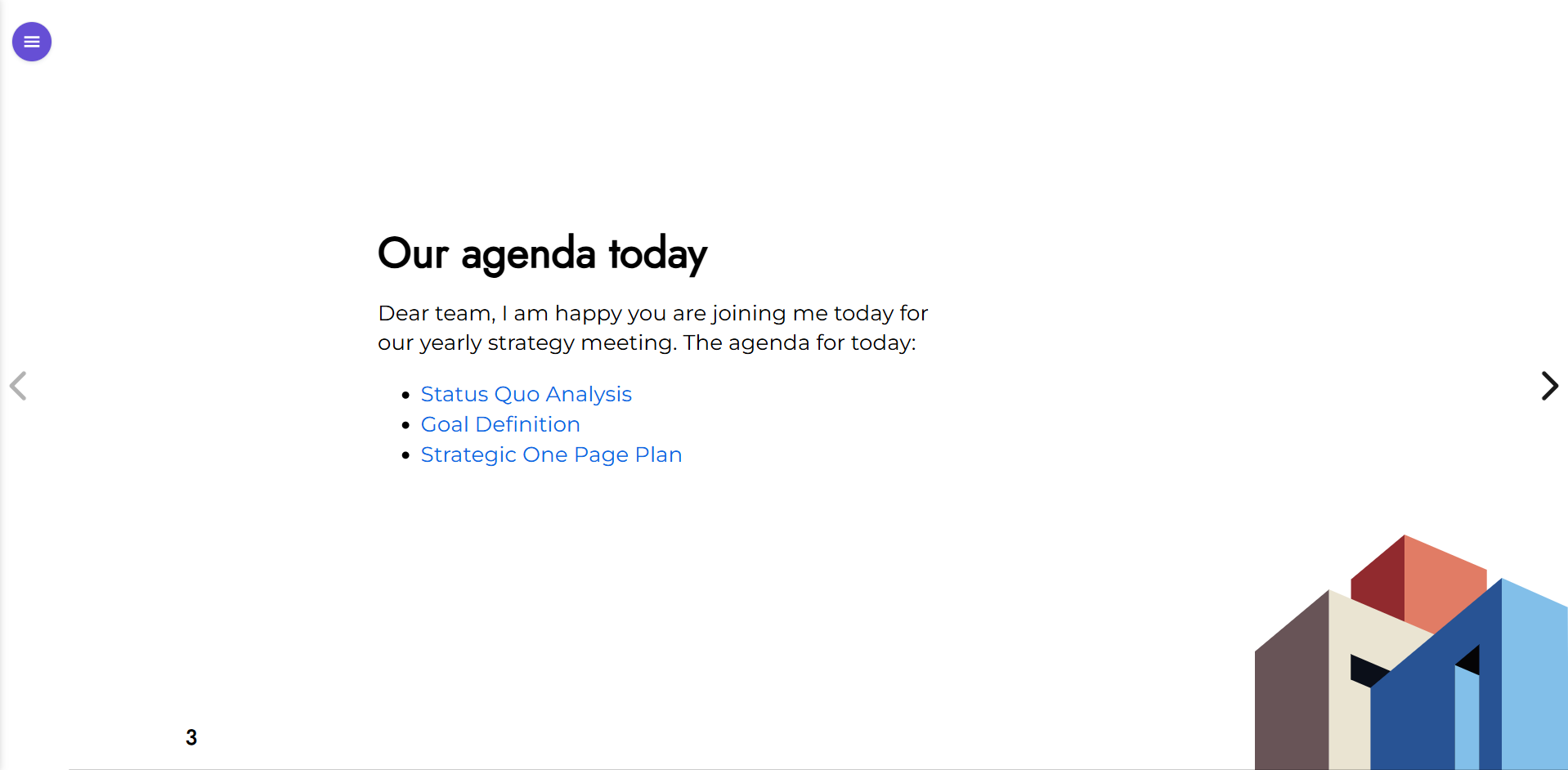
The presentation is 99% only your content, styled and layouted according to the theme you chose. The only additional UI elements are:
-
The navigation arrows - either on the left and right edges of the screen or at the bottom right. They behave like the arrow keys on your keyboard. Use them to move through the slides.
-
The menu button on the top left. It contains additional functions like slide overview, print/export etc.
🙈 Note that this button is hidden when the mouse is far away from it. Move the mouse near the top left screen corner to make the button visible.
Navigating the presentation
Legacy themes have a more complex navigation structure - if you use a legacy theme, check out an older version of the documentation.
-
To switch to the next slide, just press the
space barorArrow DownorArrow Right.
Zoom in on images and tables
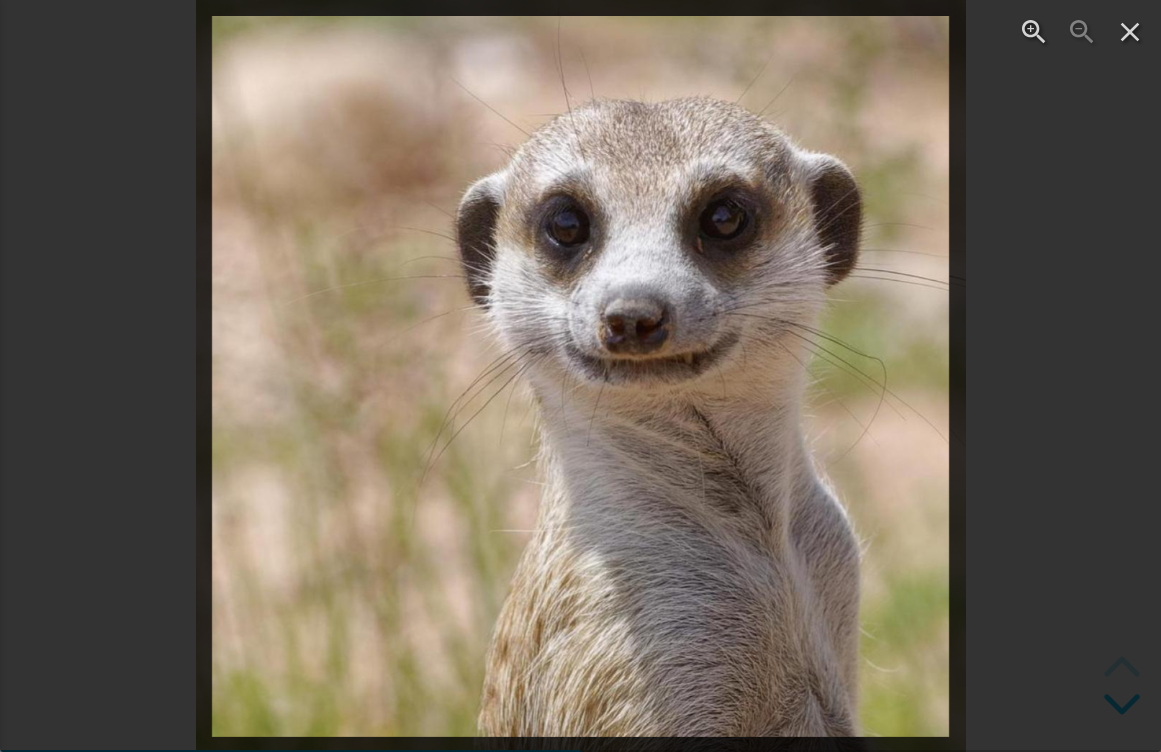

When you click on images or tables inside your presentation, a lightbox opens and shows it in full size. This way, you can show your audience images and tables in full detail.
You can zoom in to show complex diagrams in all detail. If you use draw.io for your diagrams, be sure to check out our tip on how to get even crisper diagrams in this zoom view.
Blackout screen
Pressing b or . makes the screen go completely black. Press the key again to resume the presentation. This is useful if:
-
You want to redirect the attention of your audience away from the presentation
-
You want to setup the whole presentation thing on a beamer or the like, then hide it so you can hit the ground running
Using the presentation main menu
The menu button on the top left opens a menu with additional functions for your running presentation.
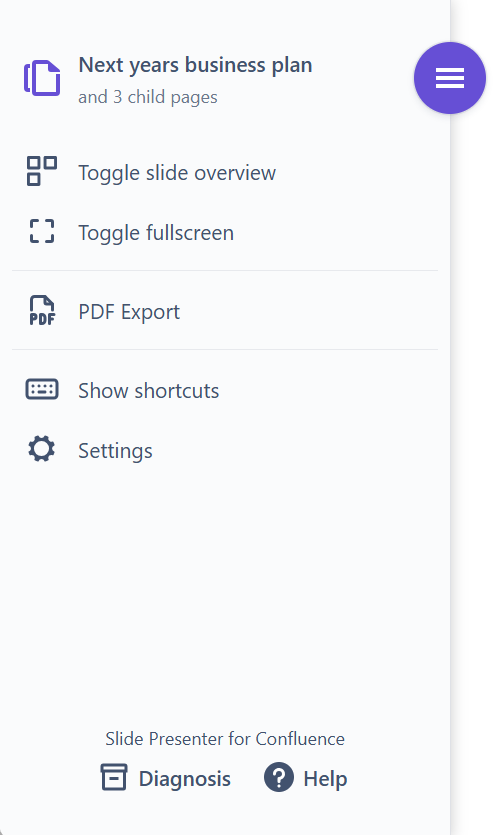
The button disappears if the mouse is far away from it to keep the screen clean. 🙈
Move the mouse to the upper left corner again to make it reappear. 🙉
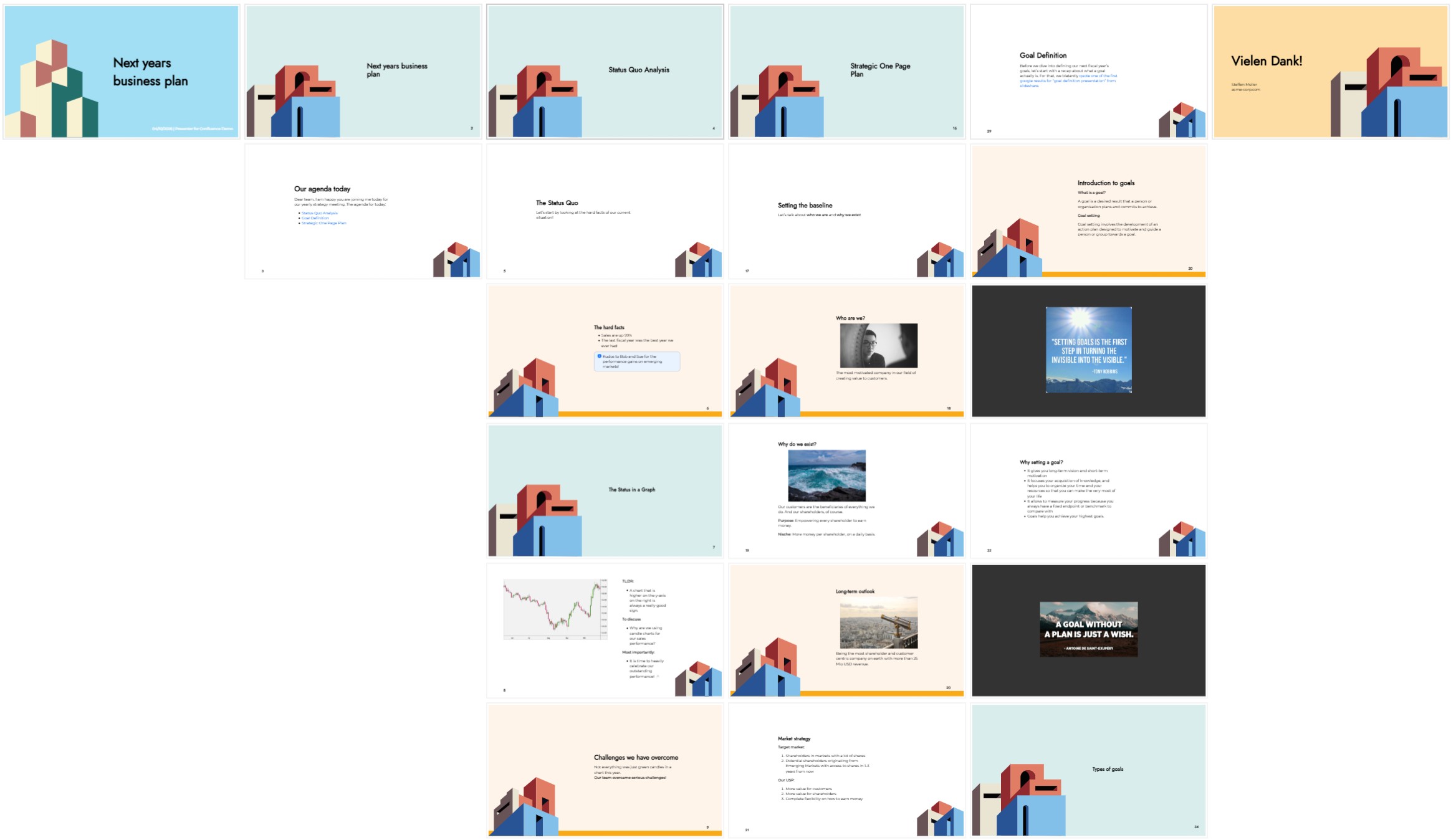
Toggle slide overview
This will take you into the slide overview. Here you can quickly navigate around in your presentation if for example somebody asks you "jump back to the slide with the video".
Use the arrow keys to move between the slides.
Use the key O (like in “O”verview, not the number) to switch the slide overview without the menu.
Toggle fullscreen
Presentations are better in fullscreen mode!
Just press F on your keyboard to toggle to fullscreen. You can leave the fullscreen mode by pressing ESC, pressing F again or using the main menu.
If the presentation started in fullscreen mode, this button is disabled. Pressing ESC ends the presentation.
PDF Export
Export your presentation to a PDF file. Learn more about it in Export to PDF file.
Show shortcuts
Displays a list of all keyboard shortcuts available to control your presentation like a pro.
Settings
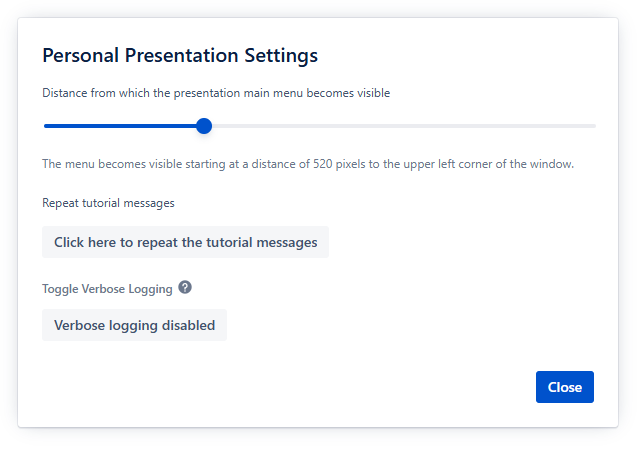
Here you can finetune your personal presentation experience. The settings you choose here are linked to your Confluence user, so they apply on each device you use Slide Presenter on.
-
Distance from which the main menu button starts to appear.
-
If you drag the bar to the left, the main menu button will only appear if you move the mouse very close to the top left corner.
-
If you drag the bar to the right, the main menu button will stay visible even if the mouse is rather far away.
-
-
Tutorial reset: If you want to see the tutorial messages that introduce you to the presentation UI again, click on the corresponding button. The next time you start a presentation, the tutorial messages will appear again.
-
Verbose Logging: If there’s a problem with your presentation rendering, enable verbose logging to create more detailed information in the algorithm’s logbooks. You can send us the logbooks in a diagnose package.
Do not enable the verbose logging if it’s not necessary, it’s a waste of resources then.
Diagnosis
Click on the “Diagnosis” button in the bottom of the menu to create a diagnosis package of the current presentation. Learn more about this on Diagnose Packages for Support.
Next: Learn more about exporting your presentation as a PDF file.